
A Booklist for Cantopop Lyrics: Reading Cantonese Pop Through Words 廣東歌歌詞:閱讀清單
This reading list continues from the previous article, A Booklist for Cantopop: Songs, History, Decline & the Golden Age. It is intended for readers interested in Cantonese lyric writing and the study of Cantopop lyrics, offering a more specialised and in-depth selection of works. Readers primarily interested in the broader historical development of Cantopop may wish to begin with the earlier booklist.
One of the defining elements of Cantopop is its lyrics. In both academic research and publishing on Cantonese popular music, a substantial body of work focuses on lyric analysis and lyricists. A distinctive feature of Cantonese popular songwriting is the practice of writing lyrics to pre-existing melodies: the tune is composed first, and words are then fitted to the musical structure, syllable by syllable. This method closely parallels the compositional practices of Dunhuang quzi ci (敦煌曲子詞) and Song dynasty ci (宋詞) poetry, both of which involved setting new texts to established melodic patterns.
The stylistic development of Hong Kong lyric writing has evolved alongside broader social and cultural changes. Early lyricists drew on both classical literary traditions and popular expressive modes, while later writers increasingly explored urban emotions, social realities, and more complex modern subjectivities.
The first generation of modern Cantopop lyricists, active in the 1970s and early 1980s, included Jimmy Lo Kwok‑tsim 盧國沾, Cheng Kwok‑kong 鄭國江, James Wong 黃霑, Tang Wai‑hung 鄧偉雄, Peter Lai 黎彼得, and Sam Hui 許冠傑. They are widely regarded as foundational figures in modern Cantonese lyric writing. Lyrics from this period tended to be relatively direct in language and often centred on everyday life. Some works retained elements of Lingnan cultural traditions and the tonal elegance of Cantonese opera, while others adopted a more colloquial, socially grounded voice that addressed working‑class experiences and contemporary social issues. Many songs from this era conveyed an affirming or aspirational outlook.
From the mid‑1980s to the 1990s, lyricists such as Richard Lam林振強, Andrew Lam 林敏驄, Jolland Chan 向雪懷, the so‑called “Two Poons” — Calvin Poon 潘源良 and Poon Wai‑yuen 潘偉源 — as well as Chow Yiu‑fai 周耀輝 and Chan Siu‑kei 陳少琪, came to prominence. As Hong Kong society modernised, lyric writing became less didactic and more metaphorical, frequently using imagery and symbolic settings to convey emotional states. Themes diversified, reflecting an increasingly urban and modern sensibility.
From the late 1990s into the 2000s, lyricists including the so‑called “Two Wai Mans” — Albert Leung 林夕 (Lin Xi) and Wyman Wong 黃偉文 — alongside Riley Pong 林若寧, Vicky Fung 馮穎琪, and Fong Kit 方杰, came to define a new phase of Cantopop lyric writing. Lin Xi is widely credited with transforming conventional narrative styles, employing dense imagery and Buddhist philosophical references to construct emotional and atmospheric lyric spaces. Wyman Wong, by contrast, is known for his imaginative and stylistically versatile writing. In 2002, he collaborated with composer Ronald Ng 伍樂城 to promote what was termed the “New Cantonese Song Movement,” advocating greater use of spoken Cantonese in lyric writing. At the same time, shifting audience tastes in the early 2000s led to a strong emphasis on romantic themes in mainstream lyrics.
From the 2010s onwards, lyricists including Siu Hak 小克, Pakkin Leung 梁栢堅, Christopher Chak 澤日生, Chan Wing‑him 陳詠謙, and Lam Bo 林寶 came to prominence, contributing to a more diverse and stylistically experimental lyric landscape. Since the late 2000s, Cantopop lyrics have increasingly engaged with local identity, collective memory, and social issues. Entering the 2020s, lyricists such as Cheung Cho‑kiu 張楚翹, Chung Suet‑ying 鍾雪瑩, Oscar Lee 李文曦, T‑Rexx 歐懷德 and Yvette Lok‑yee Wong 王樂儀 have added new voices to a scene where themes of diaspora, emotional healing, and uncertainty have become more visible, reflecting broader psychological and social shifts in Hong Kong society.
Due to the limitations of existing publications, this booklist focuses primarily on Chinese‑language works and cannot fully represent many emerging younger lyricists. Nevertheless, it aims to provide an accessible entry point for readers across the Chinese-speaking world and beyond who are interested in Cantonese lyric writing.
The following booklist is organised into four thematic categories:
Lyricists and Their Works
Lyric Studies from a Literary Perspective
Lyric Studies from a Social Perspective
Lyric Writing Guides
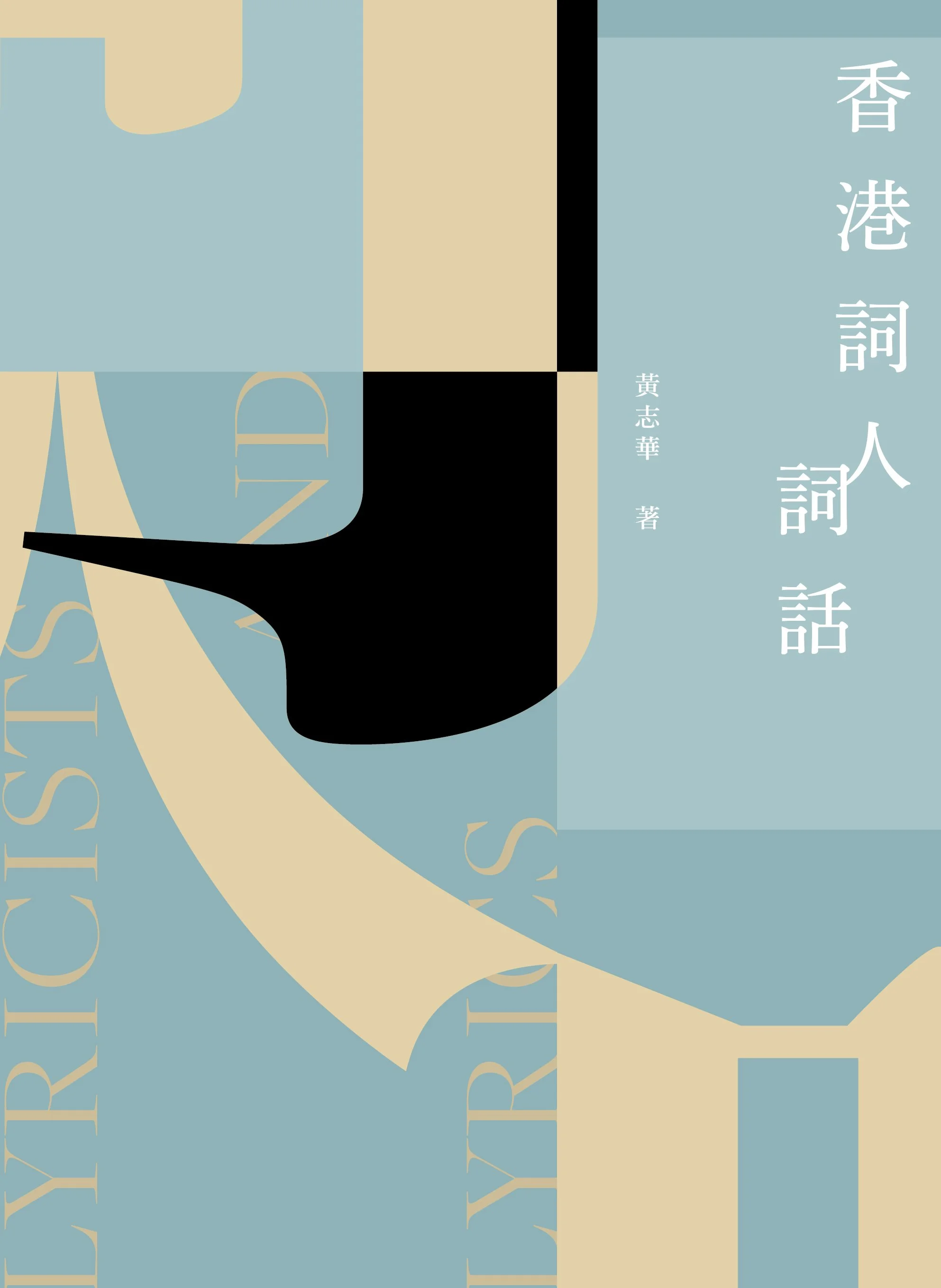
Image from Joint Publishing
Lyricists and Their Works
《香港詞人詞話》(第二版)
Hong Kong Lyricists and Lyric Talks
黃志華 Wong Chi-wah (2021)
Structured in three parts, this volume surveys the craft of Hong Kong lyricists. It begins with a look at earlier lyric traditions in classical poetry, Cantonese opera, and Cantopop, then turns to the creative experiences and selected works of six major lyricists — James Wong, Cheng Kwok kong, Jimmy Lo, Richard Lam, Calvin Poon, and Lin Xi. The final section gathers accounts from more than forty professional and amateur lyricists, offering a broad view of Hong Kong’s lyric writing community.
本書分為三部分介紹香港詞人的創作心得:先回顧古代詞人、粵曲與粵語流行曲的作詞之道,再談黃霑、鄭國江、盧國沾、林振強、潘源良及林夕六位詞人的經驗與作品,最後記錄四十多位職業及業餘詞人的事跡與分享。
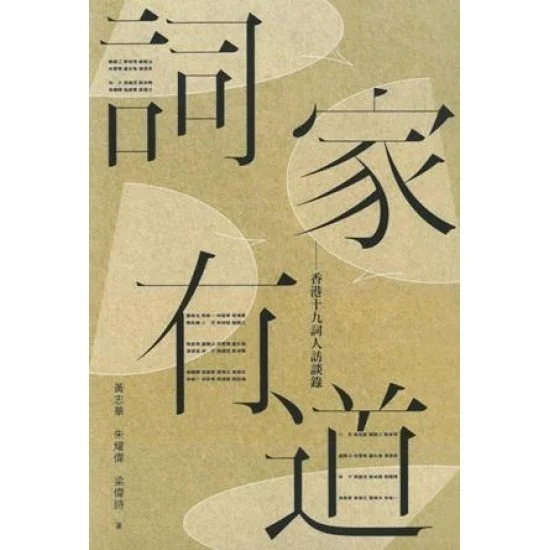
Image from Cosmos Books
《詞家有道:香港十九詞人訪談錄》
The Way of Hong Kong Lyricists: Interviews with 16 Hong Kong Lyricists
黃志華Wong Chi-wah, 朱耀偉 Stephen Yiu-wai Chu, 梁偉詩 Leung Wai-sze (2016)
This volume gathers interviews conducted by three researchers with nineteen Hong Kong lyricists from different generations. Speaking in their own voices, the lyricists recount how their works were conceived and written, share views on the lyric industry and its development, and reflect on the connections between popular lyrics, literature, society, and culture.
本書收錄了三位研究者與十九位不同世代香港詞人的訪談紀錄。詞人以第一身回顧作品構思與創作歷程,並分享對於流行詞壇、音樂工業發展的看法,探討流行歌詞與文學、社會及文化之間的關係。
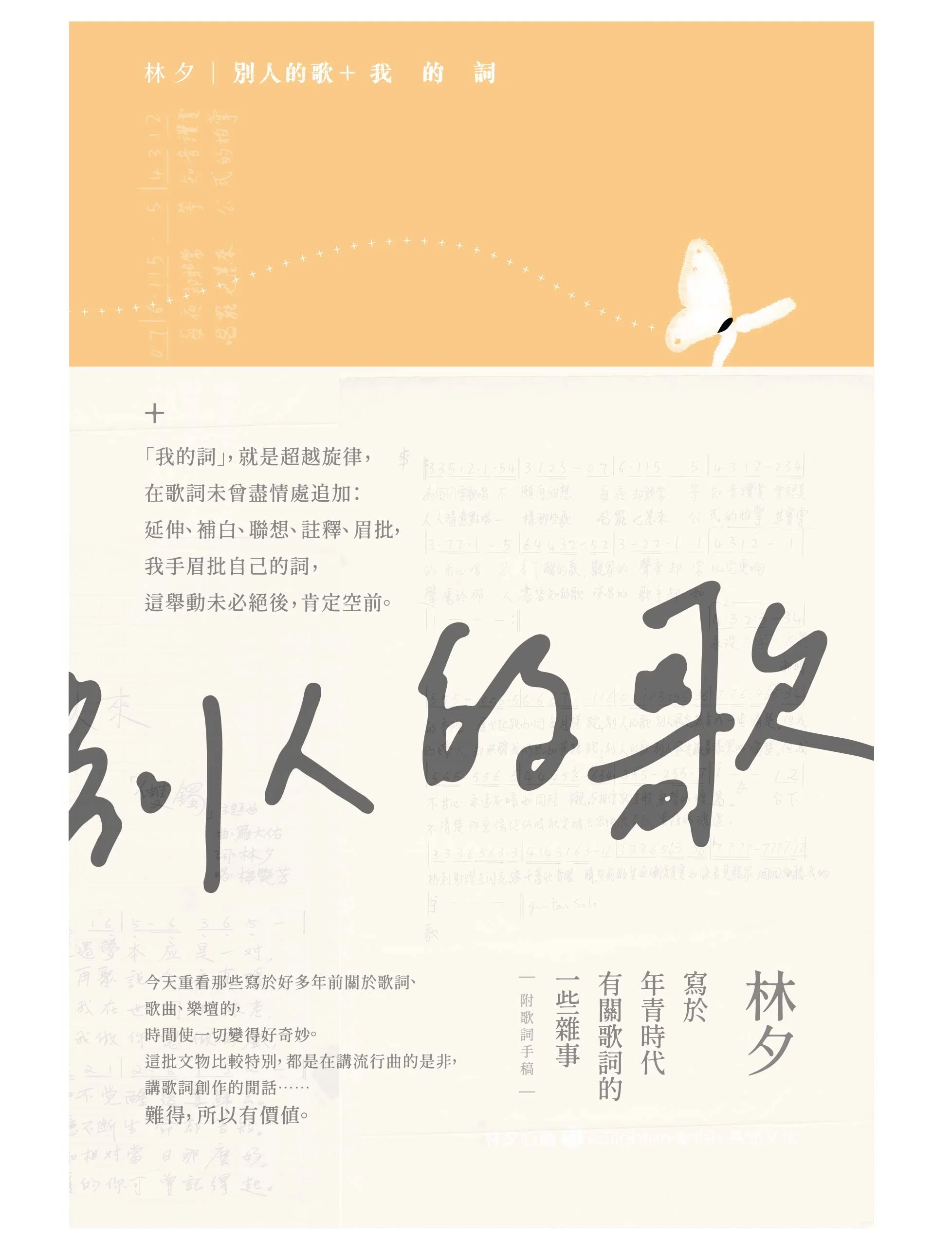
Image from Hong Kong Reading City
《別人的歌+我的詞》
Other People’s Songs, My Lyrics
林夕 Lin Xi (2022)
This collection brings together Lin Xi’s rare writings on lyric creation, combining early essays on pop song and lyric culture with later reflections on his Mandarin works. Through personal recollection and observations of the industry, it traces more than three decades of his creative life and his thoughts on popular culture and lyric writing.
本書是林夕少有專談填詞的著作,收錄他早年論述流行歌與歌詞文化的隨筆,以及後期回望國語歌詞創作的文章。透過自我回顧與對業界的觀察,呈現他三十多年來的創作歷程、靈感來源與對流行文化及歌詞書寫的思考。
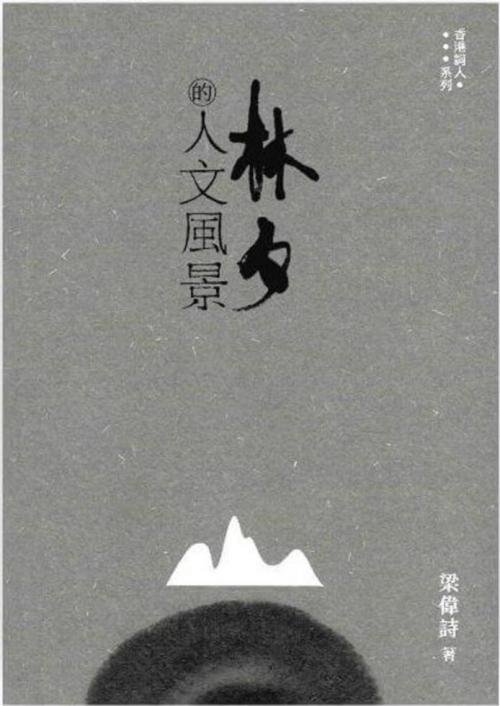
Image from My Book One
《林夕的人文風景》
Lin Xi’s Human Landscape
Approaching Lin Xi through his humanistic sensibilities, this study traces three major phases of his lyric career, examining the growth of his style and the nuances of his language. It reconstructs the “human landscape” of Lin Xi’s work and continues the story of Cantonese popular song through his writing.
本書以林夕的人文情趣與人文風骨為切入點,分三個創作階段梳理其詞作的成長與風格變化。重塑出「林夕的人文風景」,延續香港粵語流行曲的故事。
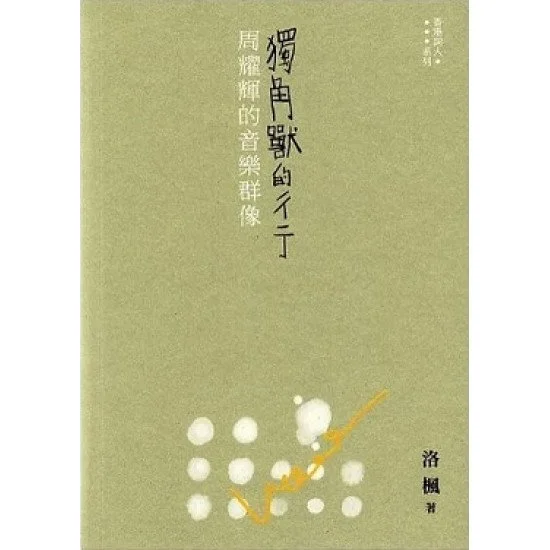
Image from Cosmos Books
《獨角獸的彳亍 : 周耀輝的音樂群像 》
Solitary Walk of Unicorn : Musical Portraits of Chow Yiu Fai
洛楓 Natalia Chan Sui-hung (2022)
Centred on the lyric work of Chow Yiu fai, this study uses cultural studies approaches to examine Hong Kong popular music through six lenses: politics, love, the body, voice, literature, and visual culture. Extending from lyrics to songs, performance, and listening practices, it maps the multiple ways popular music forms part of Hong Kong’s urban cultural memory.
本書以周耀輝的歌詞創作為核心,運用文化研究的方法,從政治、愛情、身體、聲音、文學與影像六個角度分析香港流行音樂。並由歌詞延伸至歌曲、表演與閱聽方式的討論,呈現流行音樂作為香港城市文化記憶的多重面貌。
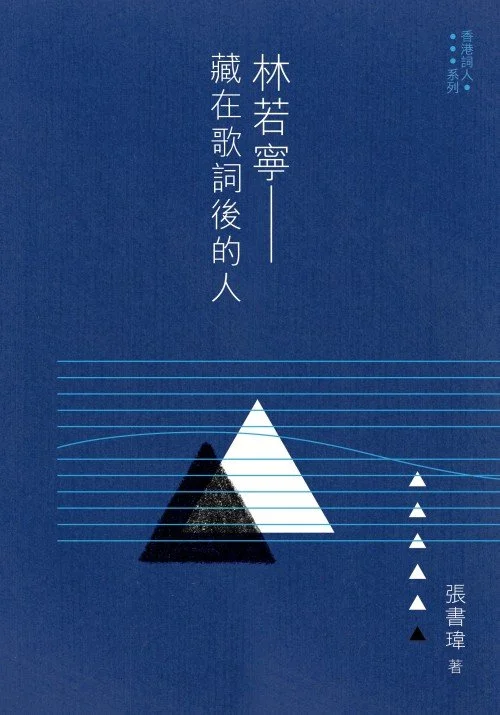
Image from My Book One
《林若寧:藏在歌詞後的人》
Riley Pong: The Man Behind the Lyrics
張書瑋 (2023)
Beginning with the popular cultural influences that shaped his youth, this book traces Riley Pong’s creative formation and lyrical voice. It examines his relationship to earlier lyric traditions and his deliberate separation between personal life and authorial identity.
本書從流行文化養分與成長背景切入,分析林若寧創作來源及其與林夕等前輩的關係,並探討其刻意區分私人生活與詞人身份的創作姿態。
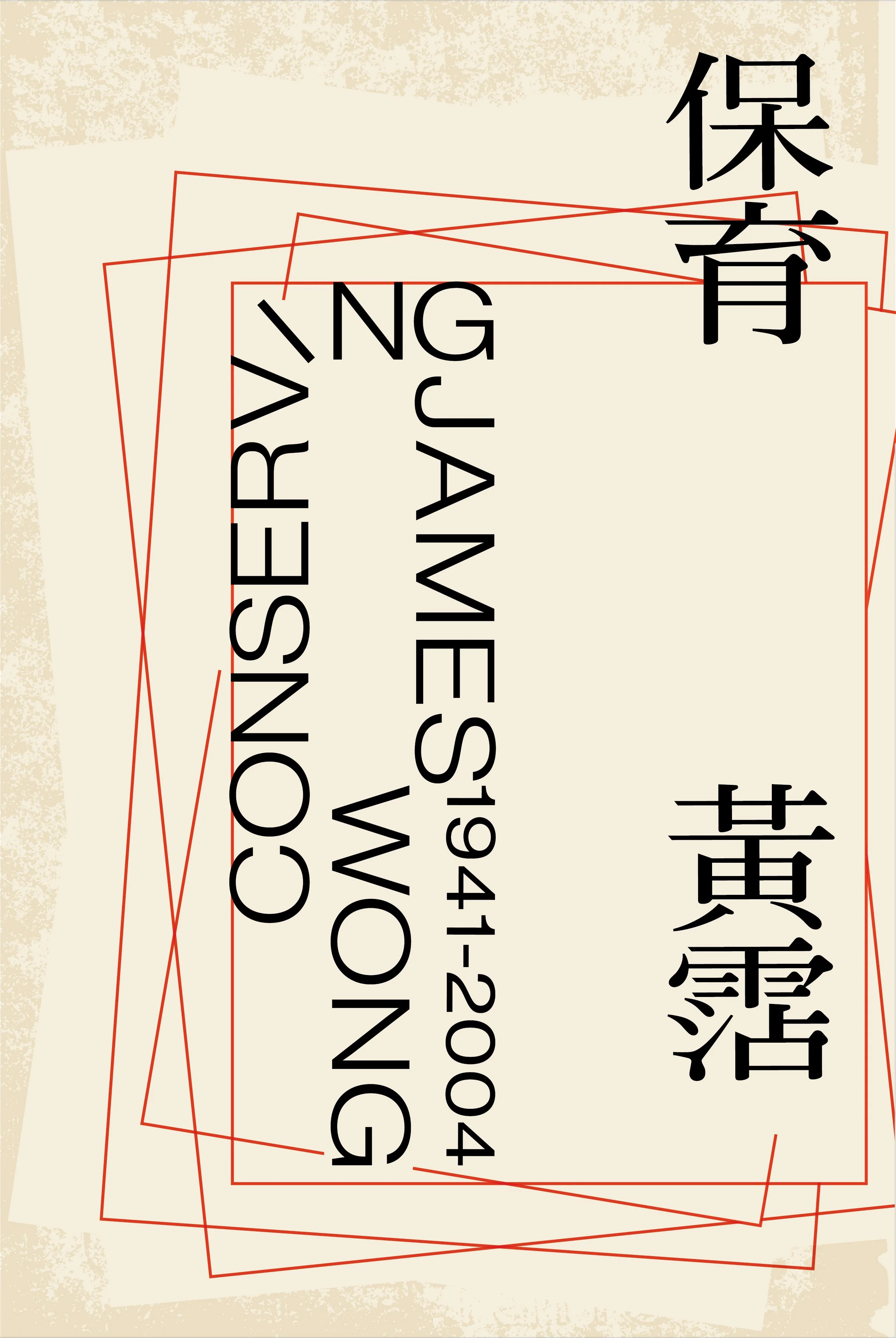
Image from Joint Publishing
《保育黃霑》(一套五冊)
Conserving James Wong
黃霑 James Wong Jum-sum, 吳俊雄 Ng Chun-hung, 黃霑書房 (2021)
This five volume collection reconstructs James Wong’s creative life and cultural significance through extensive archival materials, including essays, manuscripts, scores, correspondence, and production records. The volumes examine his biography, the formation of Hong Kong popular music, historical documentation, chronological cultural mapping, and a comprehensive catalogue of works, forming an essential research archive on Wong and Cantopop history.
《保育黃霑》透過五冊文獻整理與研究,全面重構黃霑的創作生命與文化位置。套書結合專欄文章、學術論文、手稿、樂譜、書信及創作檔案,呈現其音樂理念、人際網絡與香港社會文化發展的交錯關係。各冊分別聚焦個人成長、香港流行音樂形成、手稿與歷史材料整理、年表式文化軌跡,以及完整創作紀錄,是研究黃霑與香港流行文化的重要基礎資料。
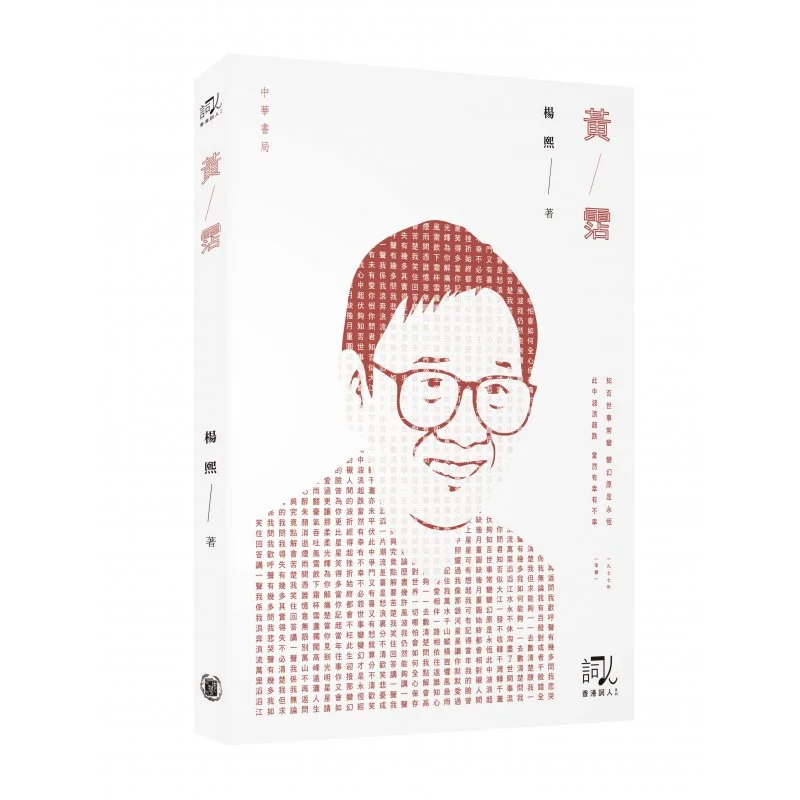
Image from Chung Hwa Book Store
《黃霑》
James Wong
楊熙 Hayes Yeung (2016)
Departing from studies that focus solely on the lyrics, this book approaches James Wong through the principle that “the lyricist and the words are inseparable.” Drawing on lectures, interviews, and close readings of sixty selected works, it examines his creative philosophy and stylistic traits, using the songs as a way to understand Wong himself.
有別於一般只以詞論詞的研究,本書以「人與詞不可分」為宗旨介紹黃霑。結合講座、訪問與文本分析,並透過六十首精選作品,探討他的創作理念與詞風特色,從作品出發理解黃霑其人。
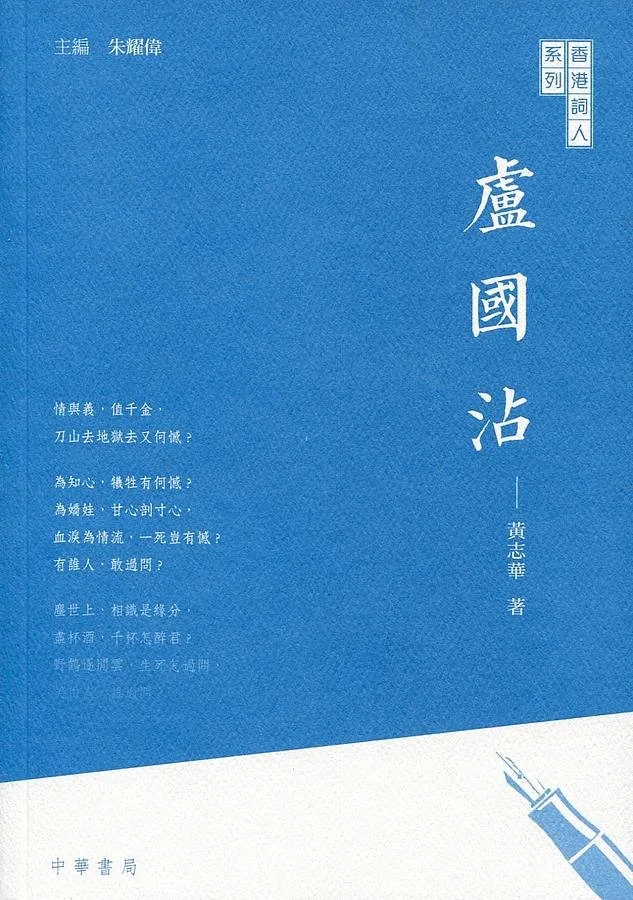
Image from Image from eslite.com
《盧國沾》
Jimmy Lo
黃志華 Wong Chi-wah (2016)
Active in the 1970s and 1980s, Jimmy Lo wrote more than three thousand lyrics, many of them iconic television and film theme songs. This study approaches his work through biography and historical context, offering a systematic analysis of his style, techniques, and lyric philosophy. Using Poetic Remarks in the Human World as a comparative framework, it evaluates the themes, characteristics, and achievements of Lo’s lyric writing.
盧國沾活躍於上世紀七、八十年代,詞作逾三千首,包括大量膾炙人口的電視劇與電影主題曲。本書從歷史背景與人生經歷切入,系統分析他的詞風、技法與填詞理念,並以《人間詞話》為比較框架,全面探討其作品的內容、特色與成就。
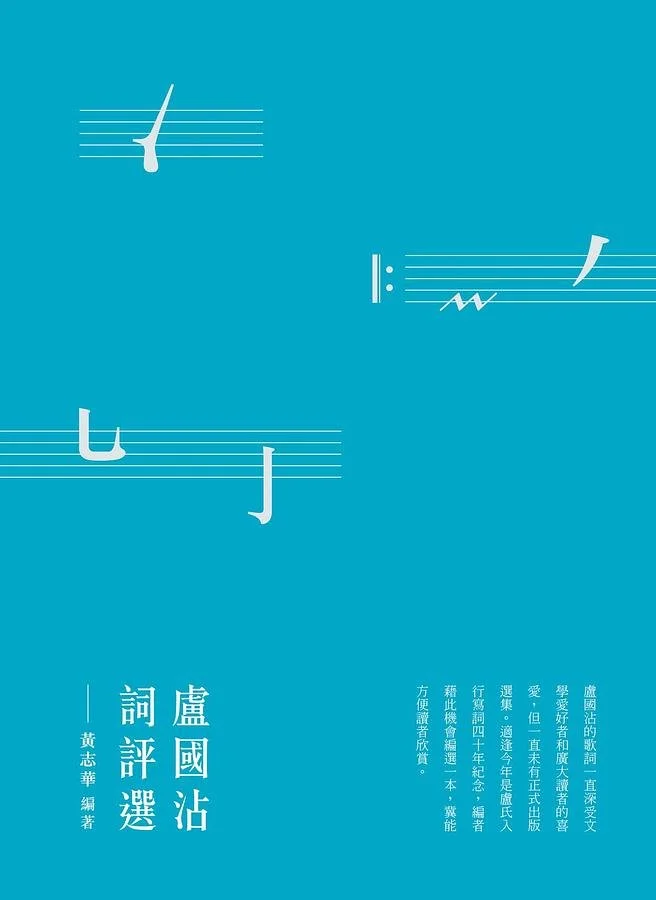
Image from Image from eslite.com
《盧國沾詞評選》
Selected Lyric Criticisms by Jimmy Lo
黃志華 Wong Chi-wah (2015)
Organised into three sections, this volume brings together critical essays on Jimmy Lo’s lyrics, Lo’s own writings on lyric craft and creative experience, and a selection of two hundred works that span different periods and themes. Through commentary, personal reflections, and an extensive lyric anthology, it outlines Lo’s stylistic traits, techniques, and creative development.
本書分為三部分:上編收錄編者對盧國沾詞作的評論與版本註記,中編輯錄盧氏早年的報章連載與其親筆回顧創作點滴,下編則選收二百首歌詞,展示他在不同時期與題材上的創作面貌。透過評論、自述與詞選三個層次,呈現盧國沾的風格特色、技法運用與發展脈絡。
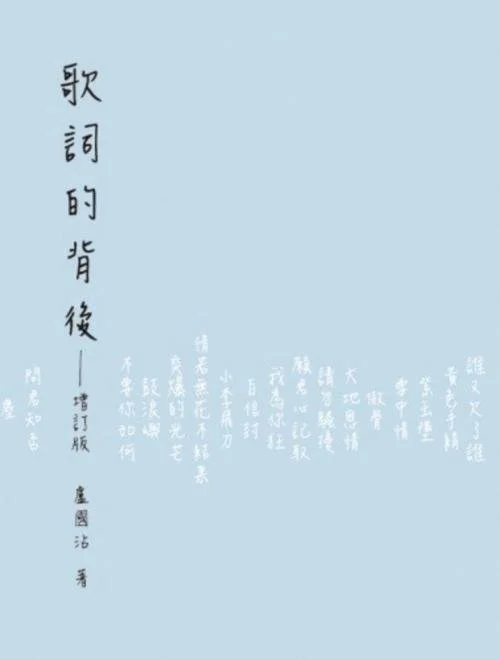
Image from My Book One
《歌詞的背後》(增訂版)
Meaning Behind the Text
盧國沾 Jimmy Lo Kwok-tsim (2014)
A first hand account of lyric creation, this book records Jimmy Lo’s process from early ideas to final drafts. Through reflections on craft, selected works, and the joys and struggles of his career, it offers an intimate look into his creative world and remains a valuable primary source for Cantopop studies.
本書為盧國沾本人的創作記錄,詳述歌詞從醞釀、構思到定稿的過程。並分享作品背後的思考與填詞生涯的喜與苦,呈現其創作世界的重要面貌。是研究香港歌詞創作的珍貴資料。
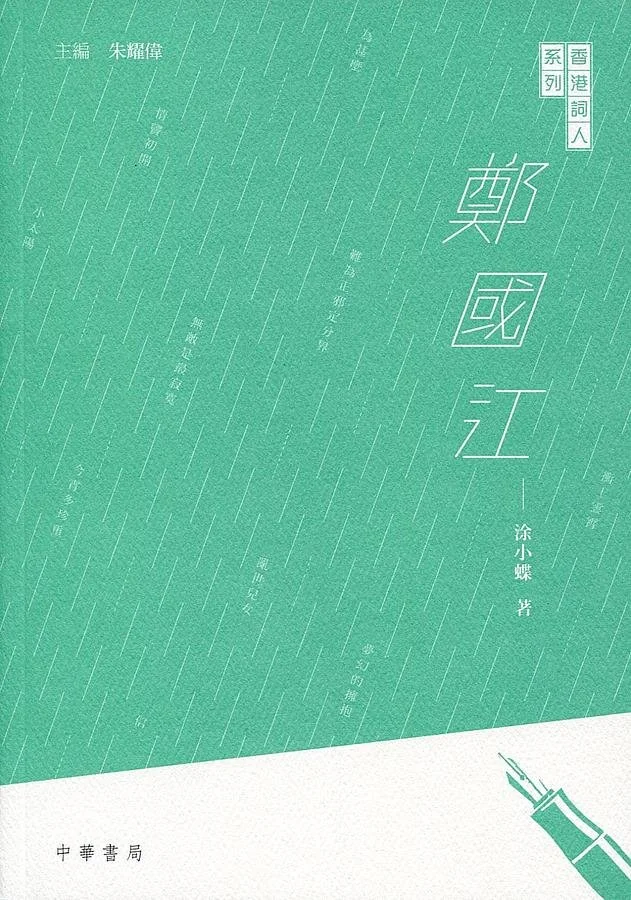
Image from Image from eslite.com
《鄭國江》
Cheng Kwok Kong
涂小蝶 Tao Siu-tip (2016)
A leading lyricist of the 1970s and 1980s, Cheng Kwok kong wrote more than two thousand songs and is widely recognised as both a pioneer of Hong Kong children’s songs and a major writer of inspirational lyrics. Organised around six themes, this study examines his works on first love, romance, motivation, children’s songs, nature, and philosophy. Through close readings of thirty selected lyrics, it draws on cultural theory and classical poetics to analyse their social contexts, meanings, and rhetorical techniques.
鄭國江是香港著名填詞人,上世紀七、八十年代與盧國沾、黃霑鼎足而立,詞作逾二千首。除情歌與哲理歌外,他亦是香港兒歌創作的先驅,被譽為「香港兒歌之父」,亦因作品積極正面而有「勵志詞人」之稱。本書以六大主題切入,分析他在初戀情懷、愛情、勵志、兒歌、自然與哲理等題材上的詞作,並透過三十首精選作品的細讀,結合文化理論與古典詩學,探討其歌詞的社會背景、寓意與修辭手法。
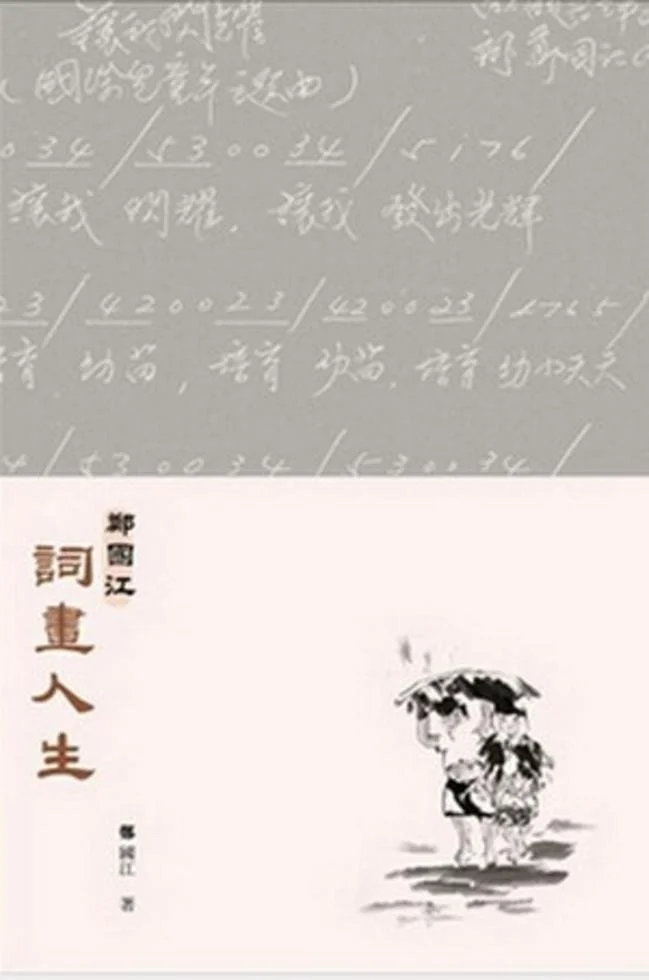
Image from My Book One
《鄭國江詞畫人生》(第二版)
Life of Lyrics and Paintings
鄭國江 Cheng Kok-kong (2014)
This volume revisits Cheng Kwok kong’s creative journey, recounting how many of his well known lyrics were conceived and written. Alongside stories behind the songs, it also includes paintings and calligraphy created in response to their themes, offering a personal record of his work across both words and images.
本書回顧鄭國江的創作歷程,細述多首歌詞的靈感來源與背後故事。並收錄他配合詞意創作的國畫與書法,呈現其在文字與藝術之間的創作足跡。

Image from Chung Hwa Book Store
《林振強》
Richard Lam
月巴氏 Calvin Choi Wai-chun (2019)
Active through the 1980s and 1990s, Richard Lam was not only a lyricist but also a columnist, cartoonist, and advertising creative, earning a reputation as a singular talent. Through lyric analysis and personal reflection, this book explores his inventive metaphors, humour, and linguistic elegance, and considers his influence on later generations of lyricists.
林振強是香港著名填詞人,活躍於八、九十年代,同時身兼專欄作家、漫畫家、廣告撰稿員與創作總監,被譽為鬼才。本書透過文本分析與作者個人觀察,呈現他在比喻創新、娛樂性與語言美感上的突破,並討論其對後世詞人的影響。
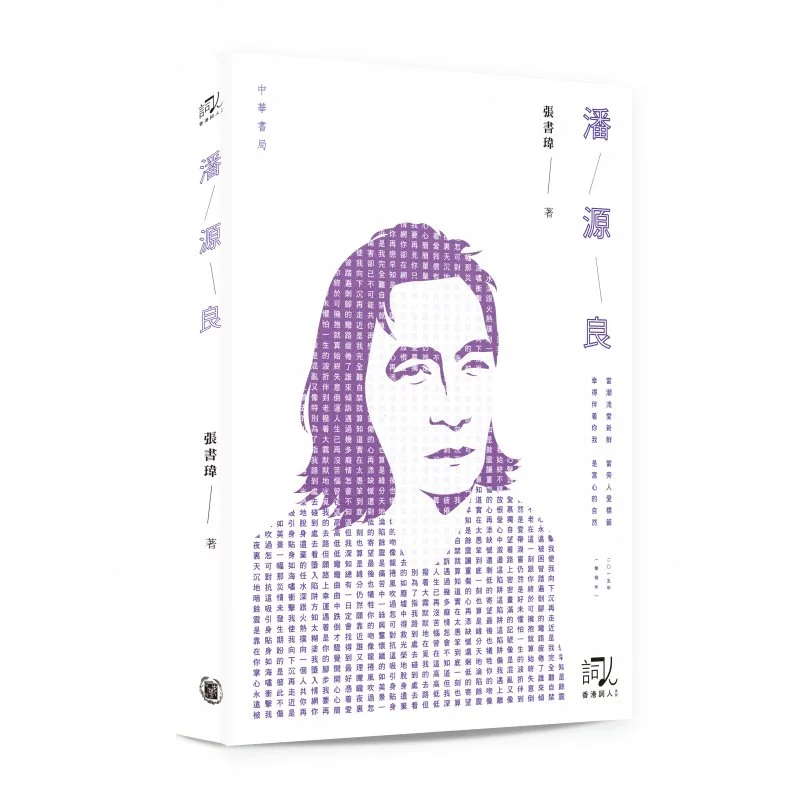
Image from Chung Hwa Book Store
《潘源良》
Calvin Poon
張書瑋 (2019)
Active in the 1980s and 1990s, Calvin Poon wrote across a wide range of themes, producing many enduring works. Beginning with his early style, this study examines the ideas embedded in his lyrics on topics such as gender, modernity, and popular culture. Detailed textual analyses highlight the content and techniques of his writing, offering readers a way into Poon’s distinctive lyric world.
潘源良活躍於八、九十年代,能駕馭人生、愛情、時事等多種題材,創作出眾多經典作品。本書從他的早期風格談起,探討他在女性角色、現代化與流行文化等題材中所滲透的觀點與思考,並以具體文本分析呈現其詞作的內容與技巧,引領讀者走進潘源良的歌詞世界。

Image from Chung Hwa Book Store
《向雪懷》
Jolland Chan
陳啓泰 Kenneth Chan Kai-tai (2019)
Active in Hong Kong’s music scene during the 1980s and 1990s, Jolland Chan is examined here through multiple disciplinary perspectives, including music, culture, history, psychology, and neuroscience. The book introduces his life and representative works, analysing how his lyrics reflect and contribute to Hong Kong’s cultural landscape.
向雪懷活躍於八、九十年代香港樂壇。本書從音樂、文化、社會、歷史、心理學、腦神經科學與精神科等多個角度分析其歌詞世界,並介紹他的生平與代表作品,呈現其創作在香港流行文化中的位置。
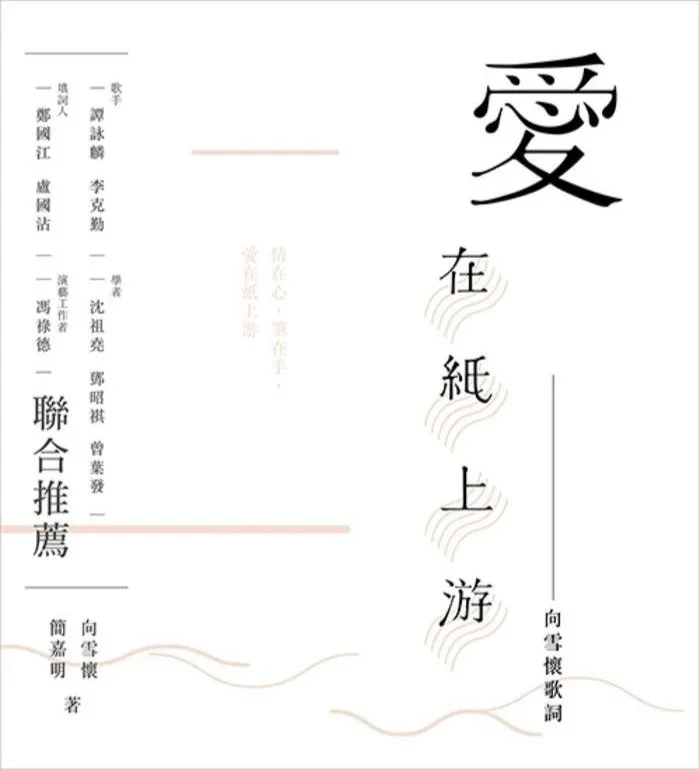
Image from My Book One
《愛在紙上游:向雪懷歌詞》
Love on the Page: The Lyrics of Jolland Chan
向雪懷 Jolland Chan Kim-wo, 簡嘉明 Betty Kan (2016)
This collection presents thirty selected lyrics with commentary on their creative origins and themes, offering insight into how personal experience is transformed into popular song text.
本書精選三十首代表歌詞,配合創作背景與賞析,呈現詞人如何以個人經歷與情感記憶構築流行音樂文本。
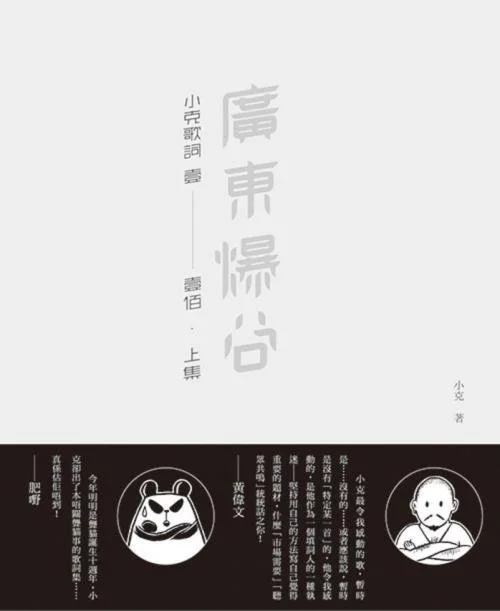
Image from My Book One
《廣東爆谷 :小克歌詞 壹至壹佰》(上下集)
Canton Popcorn: Lyrics by Chang Tsz-hin, 1–100
小克 Chang Tsz-hin (2015, 2016)
Across two volumes, this collection presents over one hundred lyrics by Chang Tsz-hin, accompanied by the author’s commentary on inspiration, drafting processes, and collaboration with composers and producers. The work offers rare insight into contemporary Cantopop lyric production and creative decision-making.
本書上下兩集合共收錄小克逾一百首歌詞作品,並由作者親自解說創作背景、靈感來源及文本演變過程。書中詳述歌詞由初稿至完成的創作歷程,以及與不同音樂人合作的經驗,呈現當代香港歌詞創作的實務面貌與個人創作思考。
Lyric Studies from a Literary Perspective
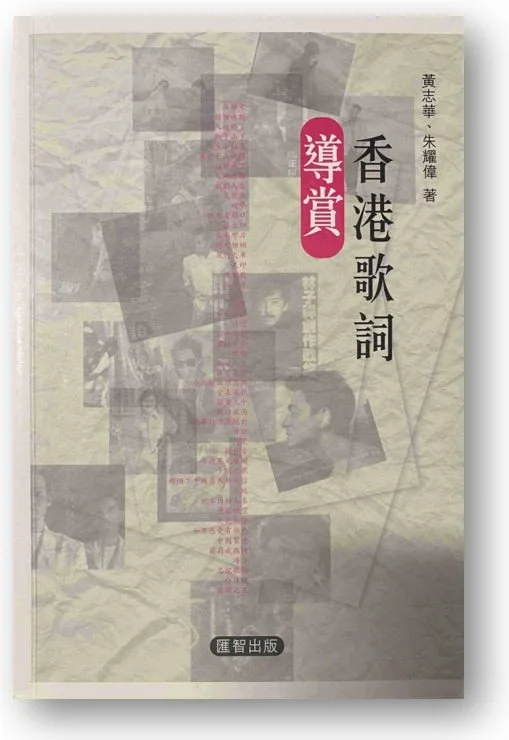
Image from Hong Kong BookShare
《香港歌詞導賞》
Appreciating Hong Kong Cantopop Lyrics
黃志華 Wong Chi-wah, 朱耀偉 Stephen Yiu-wai Chu (2009)
Widely regarded as the first monograph to examine Cantopop lyrics from a literary perspective, this book analyses fifty eight representative songs across different periods. Written by experts Stephen Yiu wai Chu and Wong Chi wah, it combines close reading and cultural analysis to demonstrate the literary value of Cantonese popular lyrics and explore their creative and cultural contexts.
本書被視為首本從文學角度系統分析粵語流行歌詞的專著。作者為粵語流行歌詞研究學者朱耀偉與資深詞評人黃志華。書中選錄五十八首不同年代的代表作品,透過文本細讀與文化語境分析,展示粵語歌詞的文學價值,並探討其創作背景與文化意義。
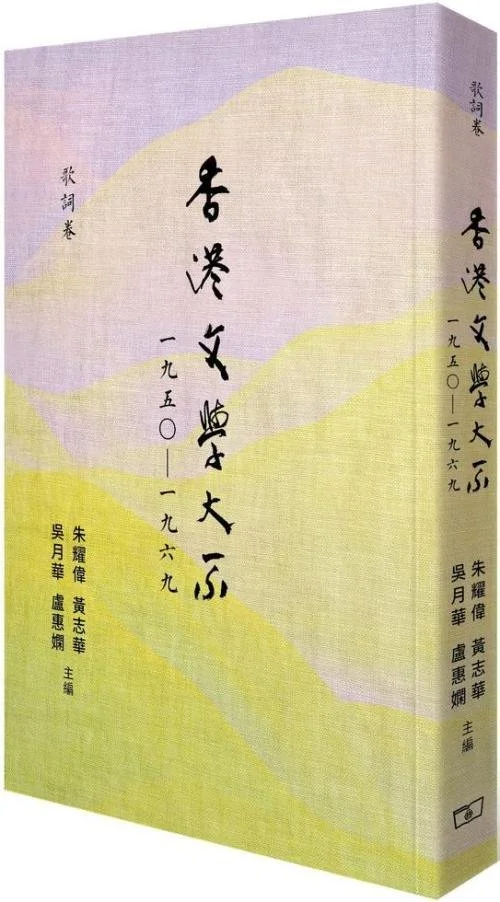
Image from My Book One
《香港文學大系一九五〇-一九六九:歌詞卷》
A Compendium of Hong Kong Literature: Lyrics
朱耀偉 Stephen Yiu-wai Chu, 黃志華 Wong Chi-wah, 吳月華 Stephanie Ng Yuet-wah, 盧惠嫻 Lo Wai-han (2020)
Part of the larger Hong Kong Literature Series, this volume documents the literary and historical value of popular song lyrics produced in Hong Kong between 1950 and 1969. The Cantonese section includes 100 lyrics, mapping the development of Cantonese lyric writing across two decades. While Cantonese popular music was culturally marginalised during this period, the selected works demonstrate that even commercial lyric writing carried literary and documentary value. The volume also includes Mandarin lyrics, reflecting the dominance of Shanghai-influenced Mandarin popular music in post-war Hong Kong and its gradual transformation alongside social and industrial change. The series as a whole combines literary evaluation, historical documentation, and archival recovery.
本書為《香港文學大系》系列叢書之一,集中探討1950至1969年間香港流行歌詞的文學與歷史價值。粵語部分收錄100首歌詞,呈現五、六十年代粵語歌詞創作的發展軌跡。雖然當時粵語流行曲文化地位較低,但作品仍展現文學性與歷史文獻價值。同時收錄國語歌詞,反映戰後上海文化影響下的香港流行音樂市場發展,以及與電影產業的緊密關係。
《逝去的樂言:七十年代以方言入詞的香港粵語流行曲研究》
Vanished Musical Voices: Dialect Usage in 1970s Hong Kong Cantopop Lyrics
簡嘉明 Betty Kan (2012)
This study examines the widespread use of dialect and colloquial Cantonese in 1970s Cantopop lyrics. Through historical, statistical, and linguistic analysis, it explores the cultural, economic, and social factors behind this trend. The book considers influences ranging from Cantonese opera to film songs and television culture, and evaluates the advantages and limitations of dialect based lyric writing. It offers valuable insight into how language choice shaped the early identity of modern Cantopop.
本書研究1970年代香港粵語流行曲大量使用方言入詞的現象,並透過歷史、統計與語言分析探討其文化、經濟與社會成因。書中分析粵曲傳統、電影歌曲與電視文化等影響,同時討論方言入詞對流行曲發展的利弊,對理解早期現代廣東歌的語言特色具有重要參考價值。
Lyric Studies from a Social Perspective
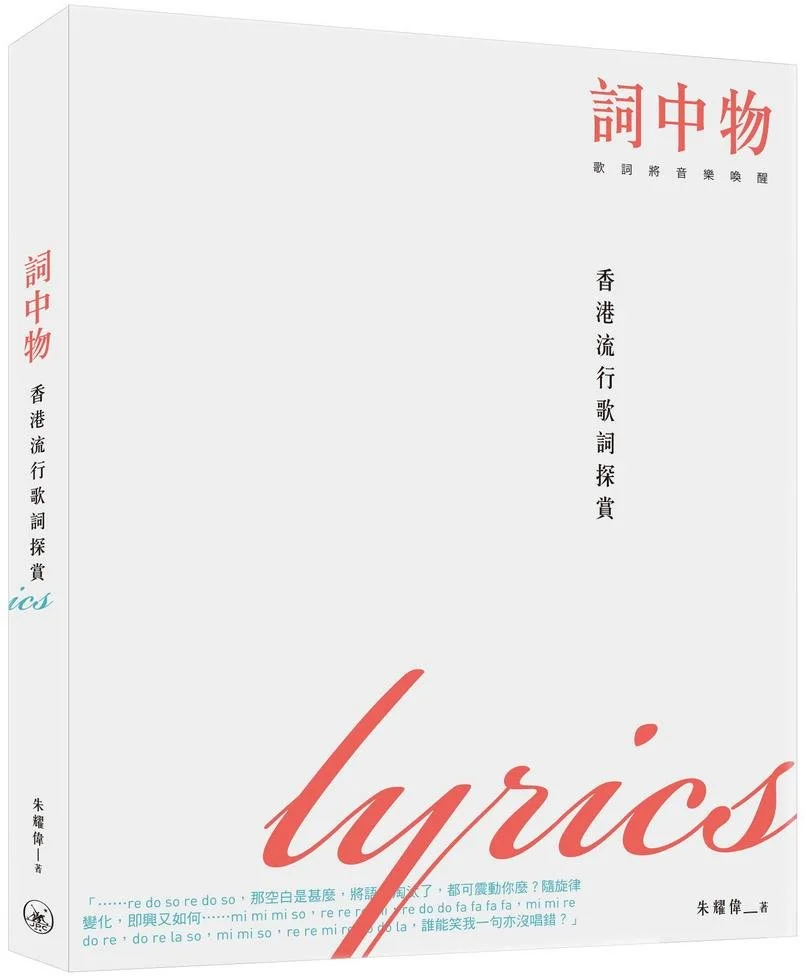
Image from My Book One
《詞中物:香港流行歌詞探賞》(第二版)
Interpreting Hong Kong Popular Lyrics
朱耀偉 Stephen Yiu-wai Chu (2020)
This study approaches Hong Kong popular lyrics through a wide cultural lens, examining how lyrics function within history, authorship, audience behaviour, and broader social forces. Chu discusses issues such as the lyricist’s agency, fandom culture, textual experimentation, the influence of karaoke, the commercial uses of pop songs, and the rise of masochistic love ballads. Rather than treating lyrics purely as literary texts, the book situates them within the cultural and social dynamics that shape Cantopop, offering valuable insights for both general readers and educators.
這本書以多角度帶領讀者理解香港流行歌詞的面貌,從歷史、詞人、文本到社會文化現象,展示歌詞如何在不同脈絡中運作。內容涵蓋填詞人的主導權、追星文化、文字實驗、卡拉 OK 的影響、流行曲的廣告功能、自虐式情歌的流行等主題,讓讀者從更立體的角度欣賞和思考香港流行歌詞。既適合一般樂迷,也適合作為教學與討論的參考。
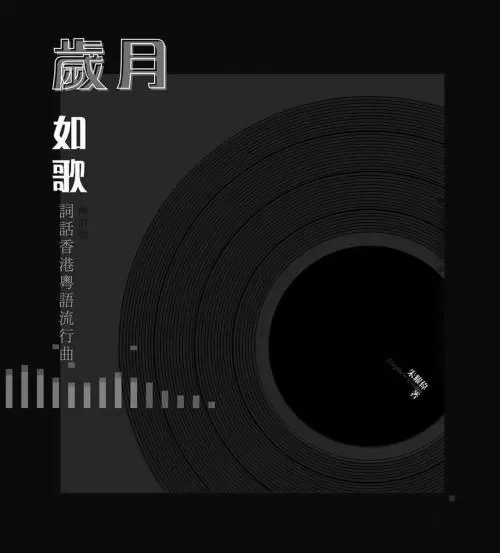
Image from My Book One
《歲月如歌:詞話香港粵語流行曲》(增訂版)
Lyrics of Your Life: The Transformation of Hong Kong Cantopop
朱耀偉 Stephen Yiu-wai Chu (2019)
Approaching Cantopop through its lyrics, this book revisits the development of Cantonese popular songs from the 1970s and 1980s to the present, examining how they have borne witness to the rises and falls of Hong Kong society over time.
朱耀偉教授從歌詞出發,邀請多位重要填詞人共同回顧粵語流行曲的發展,探討其如何見證香港社會從七八十年代至今的高低起伏。
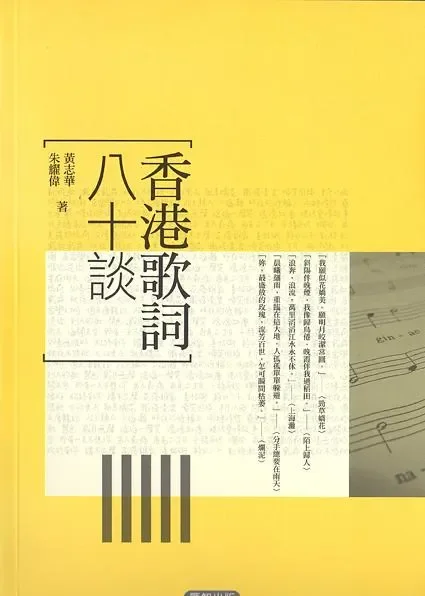
Image from eslite.com
《香港歌詞八十談》
Eighty Talks on Hong Kong Popular Lyrics
黃志華 Wong Chi-wah, 朱耀偉 Stephen Yiu-wai Chu (2011)
Through selected song lyrics spanning nine decades, this book reads Cantopop as a cultural archive of Hong Kong history. Each chapter situates songs within specific social and political moments, demonstrating how lyrics function as collective memory.
本書以歌詞導賞方式,選讀橫跨九個年代的粵語流行曲,見證香港在不同歷史時期的社會變遷與文化心態。
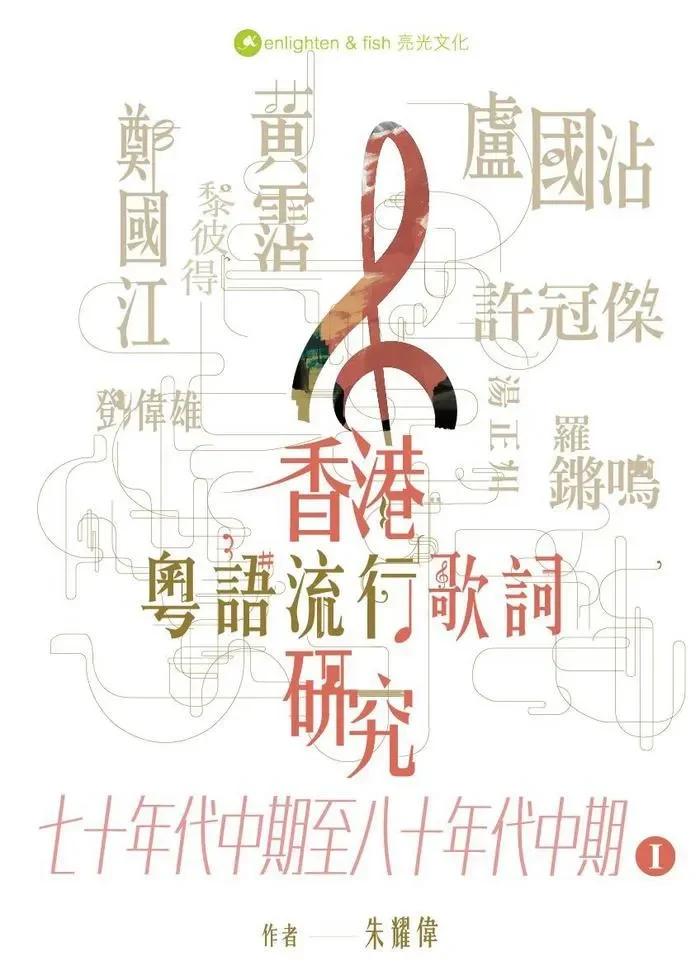
Image from My Book One
《香港粵語流行歌詞研究:七十年代中期至八十年代中期》
A Study of Hong Kong Cantopop Lyrics: Mid-1970s to Mid-1980s
朱耀偉 Stephen Yiu-wai Chu (2016)
Focusing on the formative period of Cantonese popular song lyrics in the mid-to-late 1970s, this book situates lyric writing within the expansion of television, the rise of Cantonese cinema, a booming record industry, and the emergence of a new star system. It examines the works of lyricists such as James Wong Jum Sum, Jimmy Lo Kwok-tsim, Cheng Kwok-kong, Sam Hui, and Peter Lai in relation to their historical context.
七十年代可說是香港流行歌詞的「奠基」時代。隨着香港電視普及,粵語電視劇主題曲獲得穩定的生產空間;粵語電影的興起亦推動粵語流行曲的發展;唱片市場蓬勃,新式歌星制度亦逐漸形成。朱耀偉教授圍繞七十年代中後期粵語歌詞的勃興,研究黃霑、盧國沾、鄭國江、許冠傑、黎彼得等詞人的作品,並將其置於具體的歷史與文化脈絡之中加以分析。
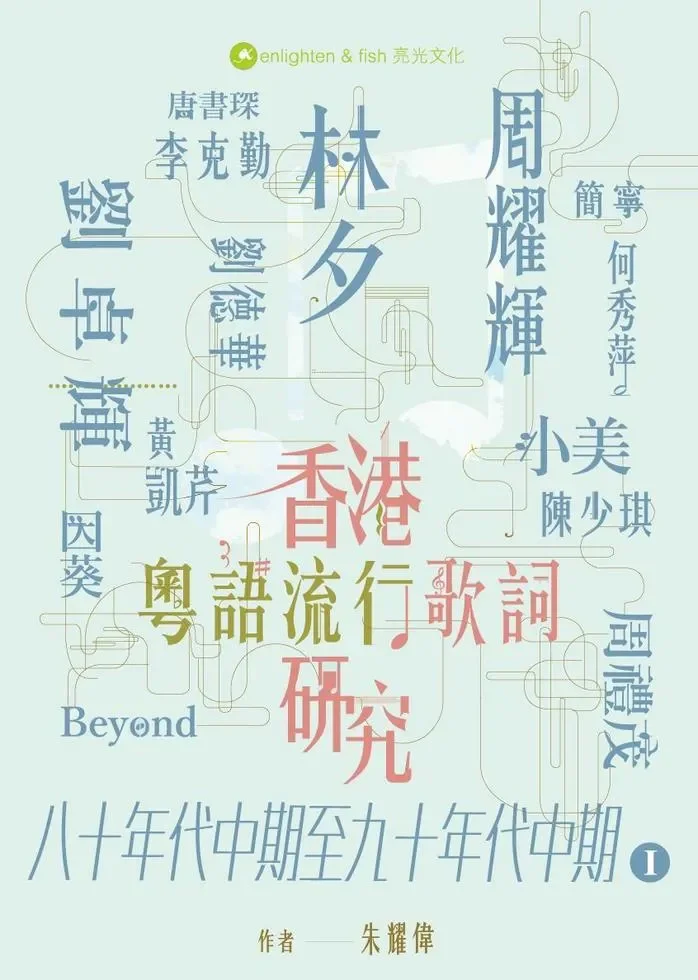
Image from My Book One
《香港粵語流行歌詞研究:八十年代中期至九十年代中期》
A Study of Hong Kong Cantopop Lyrics: Mid-1980s to Mid-1990s
朱耀偉 Stephen Yiu-wai Chu (2016)
This volume examines the close relationship between Cantonese popular song lyrics and Hong Kong popular culture from the mid-1980s to the mid-1990s. Divided into two parts, it analyses the diversification of lyric writing in the late 1980s and the new conditions of the 1990s, including the decline of band culture, the rise of karaoke, shifts in the recording industry, and changing lyrical language. While marked by increasing commercialisation, the period also saw new lyricists, independent labels, and alternative practices inject fresh energy into the field.
本書以八十年代中期至九十年代中期的粵語流行歌詞為研究核心,探討其與香港流行文化之間的緊密關係。全書分為上下兩部分:上編聚焦於八十年代後期詞壇的多元化發展,包括樂隊文化帶來的創作革新、新一代詞人的湧現,以及中文歌曲在主流媒體中獲得更大空間等現象;下編則轉向九十年代的新局面,分析樂隊文化式微、卡拉OK興起、唱片工業在龐大市場下的轉型,以及歌詞語言與題材的變化。儘管整體環境逐漸走向商業化,這段時期仍有新詞人、獨立廠牌與另類實踐為粵語流行曲注入新的活力。
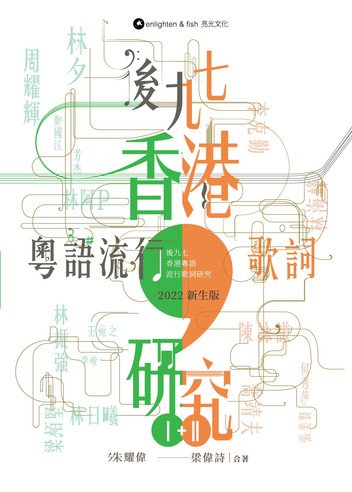
Image from Kobo
《後九七香港粵語流行歌詞研究》(新生版 I & II)
A Study of Post-1997 Hong Kong Cantopop Lyrics
朱耀偉 Stephen Yiu-wai Chu, 梁偉詩 Wai-Sze Leung (2022)
This book is a sequel to A Study of Hong Kong Cantopop Lyrics: Mid-1970s to Mid-1980s (2016). Tracing changes in Cantonese popular song lyrics before and after 1997, the author argues that rather than clinging to past models, the genre should be understood through its ongoing transformations. The book outlines developments from 2015 onwards, highlighting the emergence of Mirror and a new generation of artists who have reinvigorated Hong Kong’s music scene.
本書是作者之一朱耀偉2016年出版的《香港流行歌詞研究:七十年代中期至九十年代中期》續篇。作者認為與其留戀往日奢求用既有模式複製舊光輝,何不展望明天以無邊想像開啟新秩序。透過追蹤1997年前後香港粵語流行歌詞的變化軌跡,簡單論述由2015年至今的粵語流行曲的傳承,特別是近年Mirror及一眾新人冒起令香港流行樂壇重現活力。
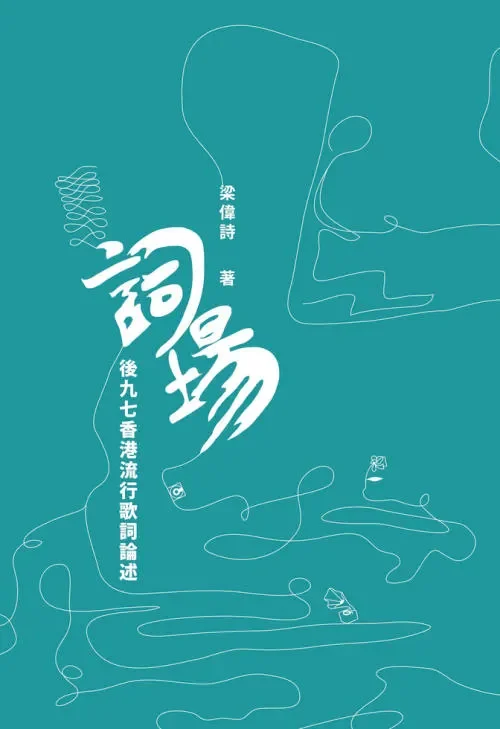
Image from My Book One
《詞場:後九七香港流行歌詞論述》
Lyric Fields: Post-1997 Hong Kong Cantopop Lyrics
梁偉詩 Leung Wai-sze (2016)
Focusing on the post-1997 period, this study analyses how Cantopop lyrics continue to negotiate identity, emotion, and everyday life amid political and cultural shifts.
香港粵語流行歌曲,一直展現著香港本土生活質量和精神面貌的豐富性,堪稱另類的香港本土文化載體。作者認為後九七香港粵語流行曲作為一種流行文化產物,在題材的寬廣度上、技藝上、細緻程度上,仍存在相當大的探索空間。透過1998到2014的作品賞析,追蹤香港粵語流行歌詞在1997後的成長足跡,探索它的傳奇。
Lyric Writing Guides
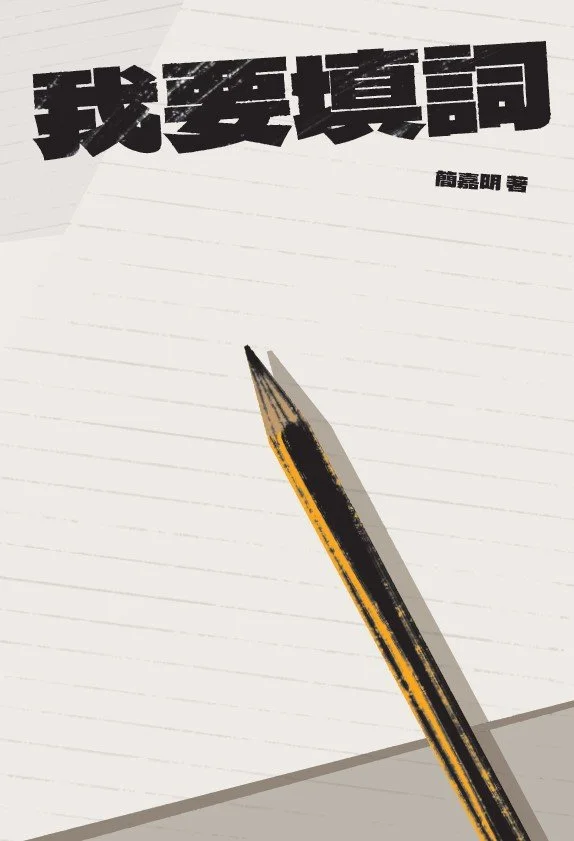
Image from Joint Publishing
《我要填詞》
I Want to Write Lyrics
簡嘉明 Betty Kan (2024)
Drawing on 18 years of professional lyric-writing experience, Betty Kan combines practical instruction with analysis of over 20 original works. The book offers a rare insider perspective on the craft of Cantonese lyric writing, covering creative processes, technical skills, and industry realities. It serves both as a practical handbook and as documentation of contemporary lyric-writing practice.
作者結合18年填詞經驗及20多首個人作品,系統講解流行歌詞創作流程、技巧與行業運作。本書兼具實用教學與行業經驗分享,為有志從事填詞創作的人提供第一手參考資料。
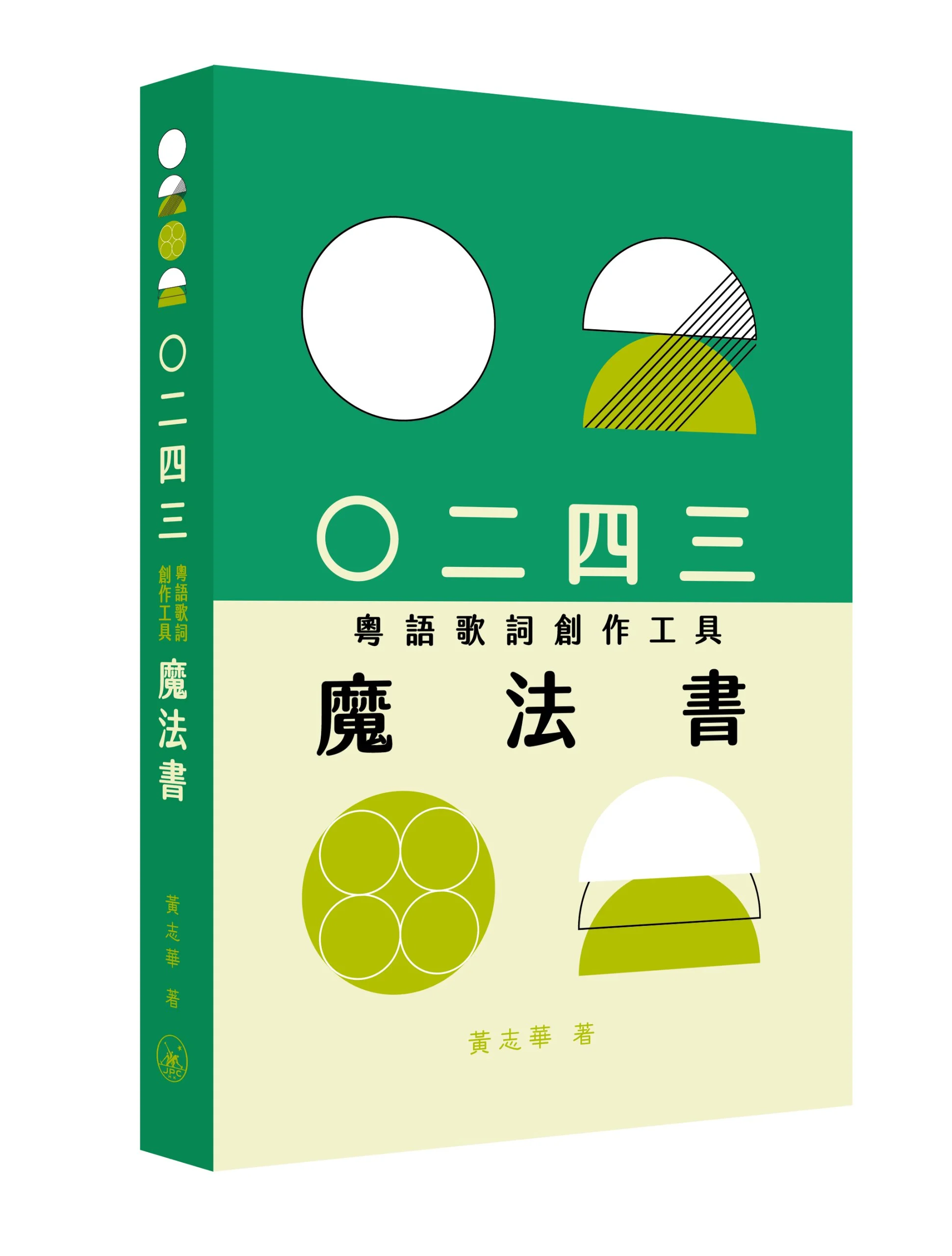
Image from Joint Publishing
《〇二四三(粵語歌詞創作工具)魔法書》
The 0243 Method: A Practical System for Cantonese Lyric Writing
黃志華 Wong Chi-wah (2024)
This book systematises the widely circulated “0243 method”, a phonetic placeholder system used to help lyricists match Cantonese tones with melody. Developed from teaching materials dating back to the 1980s, the book expands the method into a comprehensive theoretical framework covering tonal structure, phonetic compatibility, and melodic-lyrical alignment. It represents one of the most technically detailed studies of Cantonese lyric prosody.
本書系統整理填詞界流傳已久的「○二四三法」,將原本的實務技巧發展成完整理論框架。內容涵蓋聲調結構、協音關係、旋律與字音配合等技術問題,是粵語歌詞聲韻與作曲配合研究中極具深度的著作。
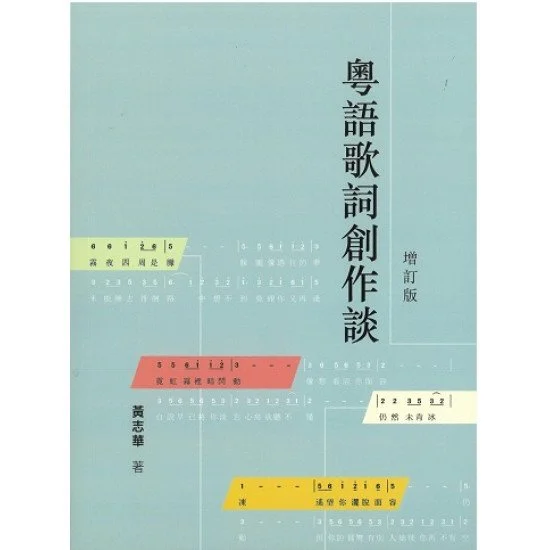
Image from Cosmos Books
《粵語歌詞創作談》(增訂版)
On Writing Cantonese Song Lyrics
黃志華 Wong Chi-wah (2024)
Based on the author’s long experience teaching lyric writing, this book explains the fundamental techniques, structures, and aesthetic principles of Cantonese lyric composition. It discusses evaluation standards, tonal-musical relationships, the development of Cantonese lyric prosody, and methods of writing lyrics before melody composition. The book also includes practical exercises for learners.
本書整理作者多年教授填詞經驗,以大量實例講解粵語歌詞創作技巧、格律、聲韻與音樂關係,以及先詞後曲理論與方法。書末附有練習方法,為學習填詞者提供系統訓練途徑。
Where available, official English titles are used as glosses. In cases where both Chinese and English versions exist, the books are treated as part of the same intellectual project rather than as direct translations.
Most English titles for Chinese-language publications are adapted with reference to Hong Kong Cantopop: A Concise History by Stephen Yiu-wai Chu, as well as biographical and bibliographic information provided on relevant university websites and institutional pages of the scholars concerned.